Computer Networks and Distributed Systems
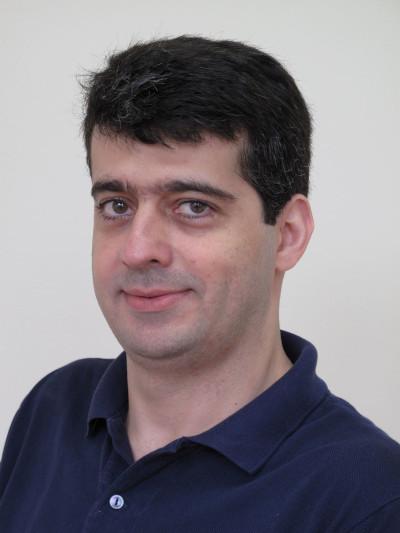
Alexandre Sztajnberg (D.Sc., 2002, COPPE/UFRJ, Brazil)
Degree in Electrical Engineering with emphasis on Computing Systems from the State University of Rio de Janeiro – UERJ (1990), Master in Electrical Engineering from the Pontifical Catholic University of Rio de Janeiro – PUC-RJ (1995) and Doctorate in Electrical Engineering from Instituto Alberto Luiz Coimbra of Graduate Studies and Research in Engineering – COPPE (2002). Has served as ad hoc consultant for entities such as CNPq, FAPERJ, Finep and FAPEMIG. He is currently a Full Professor at the State University of Rio de Janeiro, Coordinator of the Bachelor’s Degree in Computer Science, and linked to the Master’s programs in Electronics (PEL/FEN/UERJ), Computational Sciences (CComp/IME/UERJ), and Professional Master’s Degree in Telemedicine and Telehealth (MPTT/FCM/UERJ), having supervised more than 30 undergraduate and graduate students. He has experience coordinating research projects with FAPERJ and CNPq funding. He is also a network analyst at UERJ, where he carries out integration and support activities for the University’s institutional network. Has experience in Computer Science, with an emphasis on Networks and Distributed Systems, acting on the following topics: distributed systems, context-aware systems, ubiquitous and pervasive computing, cluster management and telehealth systems, P2P networks. In 2019, he became a Senior Member of the IEEE.
|
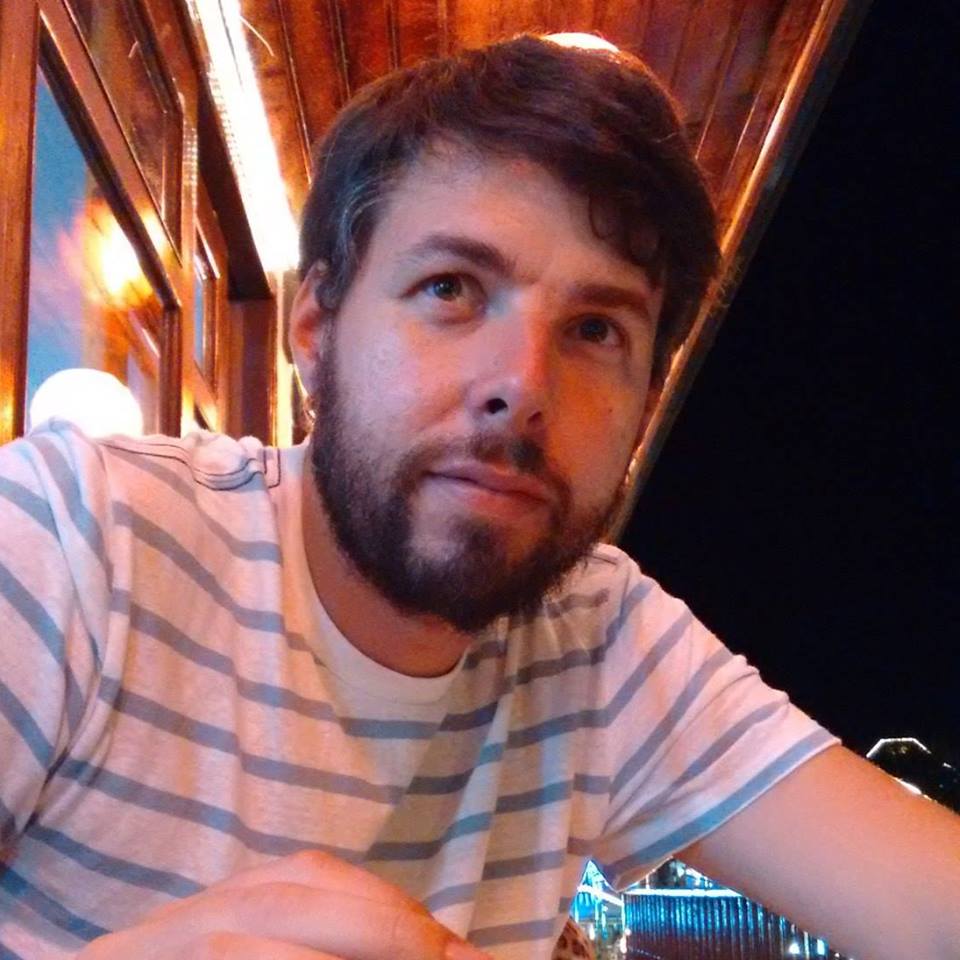
Francisco Figueiredo Goytacaz Sant’Anna (D.Sc., 2013, PUC-Rio, Brazil)
Computer Science Professor at UERJ. PhD in Conputer Science from PUC-Rio. Research interests in Programming Languages, Concurrency Models, Distributed Systems, and Embedded Systems. Main projects: (i) Céu: a programming language that explores the synchronous and reactive concurrency model. (ii) Freechains, a permissionless peer-to-peer publish-subscribe content dissemination protocol.
|
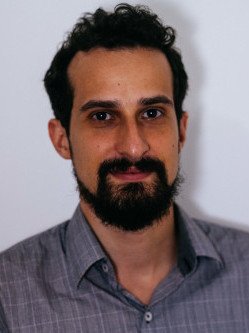
Helio do Nascimento Cunha Neto (D.Sc., 2024, PPGEET/UFF, Brazil)
Assistant Professor at the Institute of Mathematics and Statistics (IME) of the State University of Rio de Janeiro (UERJ). He earned his doctoral degree in 2024 from the Graduate Program in Electrical Engineering and Telecommunications (PPGEET) at Fluminense Federal University (UFF), where he also obtained his master’s degree in 2019. He holds HCIA 5G certification from Huawei (2021) and MTCNA/MTCIPv6E certifications from Mikrotik (2017). During his master’s and doctoral studies, he participated in research projects on teleprotection under the IEC-61850 standard, software-defined networks, identity management, and federated learning. He has experience in the fields of Computer Networks, Software-Defined Networks, Network Security, Machine Learning, Deep Learning, and Federated Learning.
|
Ian Vilar Bastos (D.Sc., 2022, IC/UFF, Brazil)
Assistant Professor at the Department of Electronics and Telecommunications (DETEL) from Universidade do Estado do Rio de Janeiro (UERJ). Doctor of Science from Universidade Federal Fluminense (UFF). He also received the B.Sc. and M.Sc. degrees in computer science from Universidade Federal Fluminense, Brazil, in 2015 and 2017, respectively. He has worked on developing an SDN-based application built on top of an ONOS controller for automatic configuration of IEC 61850 protocols with failure recovery support. He also worked on developing virtual network function auto-scaling algorithms in the context of Smart Cities for 5G-enabled mobile networks. He is currently He is currently the Deputy Coordinator of the Cybersecurity Technical Committee (CT-Cibersegurança) of the Rede Nacional de Ensino e Pesquisa (RNP). His primary research interests focus on named data networking, wireless networks, software-defined networks, networking security, and machine reinforcement learning.
|
Marcelo Gonçalves Rubinstein (D.Sc., 2001, COPPE/UFRJ, Brazil)
Has a B.Sc. degree in Electronics Engineering and M.Sc. and D.Sc. degrees in Electrical Engineering from Universidade Federal do Rio de Janeiro, Brazil, in 1994, 1996, and 2001 respectively. He is now an Associate Professor with Universidade do Estado do Rio de Janeiro. He has experience in Computer Science, with an emphasis on Computer Networks, working mainly on the following topics: computer networks, performance analysis, and wireless networks.
|
Communication Signals and Systems
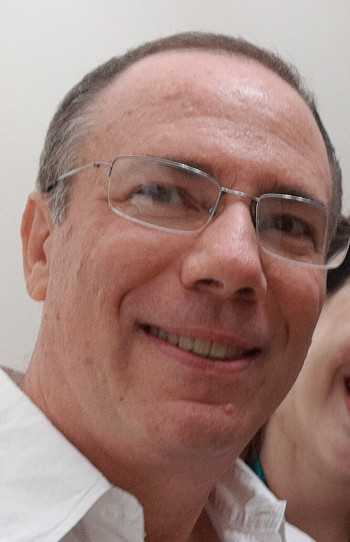
Alexandre de Resende Camara (D.Sc., 2015, PUC-Rio, Brazil)
Dr. Camara is Bachelor in Education in Physics (Universidade do Estado do Rio de Janeiro, UERJ, 2007), MSc. (2010) and DSc. (2015) in Physics (Pontifícia Universidade Católica do Rio de Janeiro, PUC_Rio). During the Master, Dr. Camara performed researches on the fabrication of metallic nanoparticles for sensing elements in the University of Victoria, Canada, and during the Doctorate, developed researches on nonlinear effects in optical fibers at ACREO AB (Stockholm, Sweden). Dr. Camara has expertise in the fabrication of metallic nanoparticles, biosensing, poling in fibers, LSPR, investigation of optical properties in doped ceramics, and finite elements method-based simulations through the COMSOL Multiphysics platform. At this moment, Dr. Camara is Adjunct Professor at “Armando Dias Tavares” Physics Institute and vice-coordinator of the Quantum Electronics Department. Dr. Camara also is a member of the Electronic Engineering Graduation Program (PEL, UERJ) Committee. |
Lisandro Lovisolo (D.Sc., 2006, COPPE/UFRJ, Brazil)
Lisandro Lovisolo is an associate professor at the Department of Electronics and Telecommunications Engineering (DETEL) at the State University of Rio de Janeiro (UERJ). At UERJ since 2003, he teaches undergraduate and graduate courses and founded PROSAICO (Laboratory for Signal Processing, Intelligent Applications, and Communications – www.prosaico.uerj.br) in 2007. He obtained his doctorate in Electrical Engineering at Universidade Federal do Rio de Janeiro (UFRJ) in 2006. He was awarded the Young Scientist of Our State (JCNE) award from FAPERJ between 2012 and 2017 and is a CNPq researcher since 2015. He was the General Coordinator of SBrT2019 (www.sbrt.org.br/sbrt2019). He has coordinated and participated in research projects funded by different development agencies and companies. He was elevated to the rank of Senior Member of IEEE in 2018 and Senior Member of SBrT in 2017. He was born in Neuquen, Argentina, in 1974; however, he feels Brazilian and was born in Rio de Janeiro. His background is in signal processing, and his main interests are signal processing, images and videos, communications systems and networks, and the underlying technologies and in computing and its various applications. He has researched signal compression, detection, and recognition of phenomena employing adaptive decomposition of signals and sparse representations, using them for different applications as modeling, compression, source separation, and other signal processing tasks. Another of his areas of research is on the positioning and location of devices through radio frequency signals. In addition, he has dedicated himself to the research, implementation, and development of wireless communication systems using different technologies (mobile networks, cell phones, etc.) and audio and video systems (Digital TV and Streaming).
|
Michel Pompeu Tcheou (D.Sc., 2011, COPPE/UFRJ, Brazil)
Graduated in Electronic Engineering from the Federal University of Rio de Janeiro (2002), Master’s and Ph.D. in Electrical Engineering from the Federal University of Rio de Janeiro (2005 and 2011, respectively). He worked as a researcher at the Electric Energy Research Center (Eletrobras-Cepel) from 2006 to 2011. He is currently a Professor at the Department of Electronics and Telecommunications (Detel) at the Rio de Janeiro State University (UERJ). He has experience in the field of Electrical Engineering, with an emphasis on Telecommunications, Signal Processing, Signal Compression and Numerical Optimization Methods. He is a member of the Brazilian Telecommunications Society (SBrT) and the Institute of Electrical and Electronic Engineers (IEEE).
|
Robert Mota Oliveira (D.Sc., 2022, Cetuc/PUC-RIO, Brazil)
Graduated in Electrical Engineering from the Federal University of Espírito Santo (1999), a MBA in telecommunications networks from the University of Vila Velha (2005), Master’s and Ph.D. in Electrical Engineering from the from the Pontifical Catholic University of Rio de Janeiro (2018 and 2022, respectively). He worked at Embratel, Oi, Dinâmica Telecom and Startup Sensorbox, accounting for 18 years of experience as an engineer. He is currently an Adjunct Professor at the Department of System and Computation (Desc) at the State University of Rio de Janeiro (UERJ). His research interests include: computer networks, telecommunications systems and error correcting codes.
|
Control and Automation
José Paulo Vilela Soares da Cunha (D.Sc., 2004, COPPE/UFRJ, Brazil)
He received the B.Sc. degree in electrical engineering from the State University of Rio de Janeiro in 1988, and the M.Sc. and D.Sc. degrees in electrical engineering from the Federal University of Rio de Janeiro in 1992 and 2004, respectively. He is currently an Associate Professor at the Department of Electronics and Telecommunication Engineering and a Prociência Scholarship at UERJ. He has experience in control systems and works mainly on the following subjects: sliding-mode control, variable structure systems, marine systems control, surface vessels and power electronics control. He is a member of the Brazilian Society of Automatics (SBA) and of the Institute of Electrical and Electronic Engineers (IEEE). He was elected member of the Support Committee for Scientific,
|
Pedro Henrique S. Coutinho (Ph.D., 2021, UFMG, Brazil)
Received his B.Sc. in Electrical Engineering from the State University of Santa Cruz (2017). He obtained his M.Sc. (2019) and Ph.D. (2021), both in Electrical Engineering, from the Federal University of Minas Gerais. He was a postdoctoral fellow with CNPq scholarship between 2021 and 2023. Currently, he is Professor in the Department of Electronics and Telecommunications Engineering at the State University of Rio de Janeiro. His research interests include Robust Control; Nonlinear Control; Cyber-Physical Systems; Fault Detection and Diagnosis; and Computational Intelligence.
|
Téo Cerqueira Revoredo (D.Sc., 2011, COPPE/UFRJ, Brazil)
Electrical Engineer (emphasys in electronic systems) graduated at the State University of Rio de Janeiro (2003), Master in Electrical Engineering – Control Systems (process control and robotics) at the Instituto Alberto Luiz
|
Tiago Roux de Oliveira (D.Sc., 2010, COPPE/UFRJ, Brazil)
Dr. Tiago Roux Oliveira was born in Rio de Janeiro, Brazil, 1981. He received the B.Sc. degree in Electrical Engineering from the State University of Rio de Janeiro (UERJ) in 2004, the M.Sc. and Ph.D. degrees both in Electrical Engineering from the Graduate School and Research in Engineering, Federal University of Rio de Janeiro (COPPE/UFRJ), in 2006 and 2010, respectively. In 2014, he was a Visiting Scholar with the University of California – San Diego (UCSD), CA, USA. He is currently an Associate Professor with the Department of Electronics and Telecommunication Engineering (DETEL), UERJ. His current research interests include nonlinear control theory, extremum seeking, sliding mode control/observers, time delays and boundary control for partial differential equations. He published about 200 refereed journal articles, conference papers and book chapters. Dr. Oliveira has served as a member of the IFAC Technical Committees: Adaptive and Learning Systems (TC 1.2) and Control Design (TC 2.1), and the Technical Committee on Variable Structure and Sliding Mode Control of the IEEE Control Systems Society (CSS). He was a recipient of the Bolsa Nota 10 (Highest Rank Scholarship prize) sponsored by the Brazilian Agency FAPERJ, the CAPES National Award of Best Thesis in Electrical Engineering, in 2011, and the FAPERJ Young Researcher Award, in 2012, 2015, and 2018. Prof. Tiago was the Guest Editor of the International Journal of Adaptive Control and Signal Processing in the Special Issue “From Adaptive Control to Variable Structure Systems – Seeking Harmony”. He has served also as an Associate Editor on the Editorial Board of the Journal of the Franklin Institute, the Journal of Control, Automation, and Electrical Systems, the IEEE Latin America Transactions, Systems & Control Letters, and the International Journal of Robust and Nonlinear Control. In 2017, he was nominated as an Affiliate Member of the Brazilian Academy of Sciences (ABC). In 2018, he was elevated to the grade of IEEE Senior Member of the CSS. Since 2019, he is an Associate Editor for the European Control Association Conference Editorial Board (EUCA-CEB). In 2020, he was elected and nominated Chair of the Technical Committee 1.2 (Adaptive and Learning Systems) of the IFAC for the triennium 2020-2023.
|
Victor Hugo Pereira Rodrigues (D.Sc., 2022, COPPE/UFRJ, Brazil)
Victor Hugo Pereira Rodrigues holds a D.Sc. in Electrical Engineering (2022) from the Federal University of Rio de Janeiro (UFRJ), a Master’s degree in Electronic Engineering (2018), and a Bachelor’s degree in Electrical Engineering with an emphasis on Electronic Systems (2015) from the State University of Rio de Janeiro (UERJ). During his doctoral studies, he was distinguished with the Nota 10 scholarship from the Rio de Janeiro State Research Foundation (FAPERJ). Also, he received funding from the National Council for Scientific and Technological Development (CNPq). Throughout his Master’s program, he was supported by a scholarship from the Coordination for the Improvement of Higher Education Personnel (CAPES). During his undergraduate studies, he was granted a Technological Initiation (IT) scholarship from CNPq. His research interests encompass nonlinear control, adaptive control, and variable structure control. Since April 2024, he has served as an Associate Professor in the Department of Electronic Engineering and Telecommunications (DETEL) at the State University of Rio de Janeiro (UERJ). Before this, from January to April 2024, he taught as a Professor of Basic, Technical, and Technological Education (EBTT) at the Federal Center for Technological Education Celso Suckow da Fonseca (CEFET/RJ). Additionally, he is a member of the Brazilian Society of Automatic Control (SBA), the Institute of Electrical and Electronics Engineers (IEEE), the International Federation of Automatic Control (IFAC), and the Engineering Club (CE).
|


Energy Systems
Cleiton Magalhães Freitas (D.Sc., 2020, COPPE/UFRJ, Brazil)
Cleiton M. Freitas received his B.Sc and M.Sc. in Electronic Engineering from Rio de Janeiro State University in 2011 and 2014, respectively, and his D.Sc in Electrical Engineering from the Federal University of Rio de Janeiro/COPPE in 2020. Currently, he is an Adjunct Professor at Rio de Janeiro State University in charge of electromechanical energy conversion and power electronics disciplines for undergraduate and graduate courses, respectively. His current research interests include Modular Multilevel Converters and their analytical modeling, grid-forming converters, renewable resources and their integration into power grids, and stability analysis of power electronics converters. |
Luís Fernando Corrêa Monteiro (D.Sc., 2008, COPPE/UFRJ, Brazil)
Luís F. C. Monteiro graduated in Electrical Engineering (Power Systems) from the Federal University of Rio de Janeiro (UFRJ) in 2001, Master’s and Ph.D. in Electrical Engineering (Power Electronics) from COPPE/UFRJ in 2003 and 2008, respectively. Between 2006 to 2008 received a scholarship from the Alban program to carry out his sandwich doctorate at the University of Minho, Portugal. He is currently an Associate Professor at the Department of Electronics and Communications at the State University of Rio de Janeiro. His researches are in the field of Electrical Engineering, with an emphasis on Power Electronics for electrical distribution networks in low and medium voltage, working mainly on the following topics: real-time control algorithms, active power conditioners, the interface of electronic converters with power sources, renewable energies with the electrical distribution network and electronic converters connected to medium-voltage power grids.
|
Maria Dias Bellar (Ph.D., 2000, Texas A&M Univ., USA)
Maria Dias Bellar (S’90-M’01-SM’16) received the B.Sc. degree in electronics engineering and the M.Sc. degree in electrical engineering from Federal University of Rio de Janeiro, Rio de Janeiro, in 1986 and 1989, respectively, and the Ph.D. degree from Texas A&M University, College Station, in 2000. From 2010 to 2011 she was a post-doctoral researcher at the Research Center on Renewable Electrical Energy Systems (SEER) of the Polytechnic University of Catalonia – BarcelonaTech, Barcelona, Spain. She is presently an associate professor at State University of Rio de Janeiro, Rio de Janeiro. She has experience in electrical engineering research with emphasis on power electronics. Her current research interests include converters with high power factor, converters for renewable energy systems, multilevel converters and electronic converters for motor drives.
|

Intelligent Systems
Jorge Luís Machado do Amaral (D.Sc., 2006, PUC-Rio, Brazil)
Jorge Amaral received the B.Sc. degree in electronic engineering from the Federal University of Rio de Janeiro, Brazil, in 1991, the M.Sc. degree in electrical engineering from the Federal University of Rio de Janeiro, Brazil, in 1999, and D.Sc. degree in electrical engineering in 2006 from the Catholic University of Rio de Janeiro. He was a Young Scientist of Our State (JCNE) until 2019. He is currently an Associate Professor at the State University of Rio de Janeiro. Has experience in Electrical Engineering, with an emphasis on Instrumentation, Fault Diagnosis, and Intelligent Systems, acting on the following topics: Machine Learning, Intelligent Systems applied to Instrumentation, Fault Detection and Diagnosis, Artificial Immune Systems, Multi-Objective Optimization, and Industrial Wireless Networks.
|
José Franco Machado do Amaral (D.Sc., 2003, PUC-Rio, Brazil)
José Franco Machado do Amaral is an Associate Professor and Researcher of the Electronics and Telecommunication Engineering Department, Faculty of Engineering, at the Rio de Janeiro State University (UERJ). He received the BSc, MSc and D.Sc. degrees in Electrical Engineering from the Pontifical Catholic University of Rio de Janeiro (PUC-Rio), Brazil, in 1982, 1987 and 2003, respectively. He has developed with the private sector as an Engineer, Engineering Manager, Consultant and Researcher, several projects for Industrial, Commercial and Banking Automation. His research interests include Automation, Intelligent Systems, Evolutionary Electronics, Adaptive Hardware and Systems, Evolutionary Computation, Evolvable Hardware, Analog and Digital Circuits.
|
Luiza de Macedo Mourelle (Ph.D., 1998, UMIST, Great Britain)
She has a bachelor degree in Eletronics Engineering by the Federal University of Rio de Janeiro (1980), M.Sc. degree in Systems Engineering and Computation by the Federal University of Rio de Janeiro (1988) and Ph.D. degree in Computation by the University of Manchester Institute of Science and Technology (1998). She is a full professor at the State University of Rio de Janeiro and has a research scholarship from the federal agency CNPq. She has experience in Computer Science, with emphasis in Computer Systems Architecture, acting mainly in the following topics: hardware, VHDL, FPGA, synthesis of digital Systems, embedded Systems, co-design, interconnection networks, computational intelligence.
|
Nadia Nedjah (Ph.D., 1997, UMIST, Great Britain)
Nadia Nedjah graduated in Systems Engineering and Computation (Ingeniorat en informatique) – Université de Annaba (09/1982 – 08/1987). She holds a Master of Science in Systems Engineering and Computation (Magister en Systèmes Informatiques) – Université de Annaba (09/1987 – 08/1990) ) and Doctorate in Systems Engineering and Computation (Ph.D. in Computation) – University of Manchester Institute of Science and Technology (04/1994 – 12/1997). She is currently an Associate Professor at the State University of Rio de Janeiro (UERJ). She has experience in the field of Computer Science, with an emphasis on computer systems, working mainly on topics related to embedded systems, automatic synthesis of digital systems, FPGA architectures, parallel architectures, hardware for cryptography, co-design hardware/software methodology, intelligent systems and artificial intelligence techniques and distributed algorithms for swarm robotics.
|
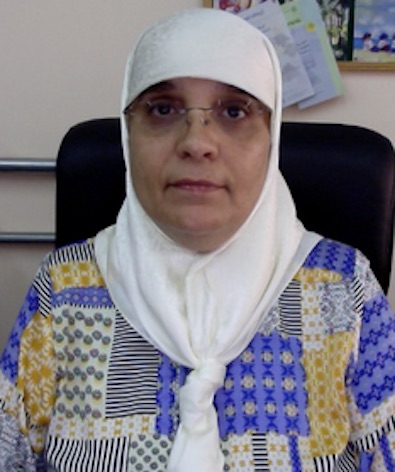
Emeritus Professor
Nival Nunes de Almeida (D.Sc., 1997, COPPE/UFRJ, Brasil) – Former Rector of UERJ
|
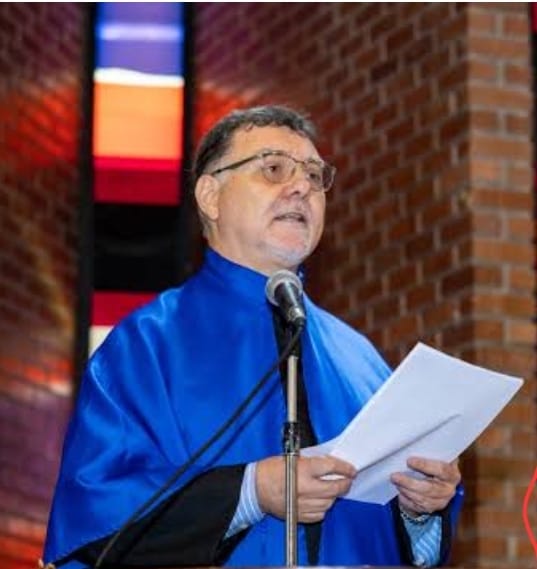
Former Faculty Members
Pedro Henrique Gouvêa Coelho (Ph.D., 1983, BU, Grã-Bretanha)
|
José Rodolfo Souza (Ph.D., 1983, TCU, Grã-Bretanha)
|
Antonio Romeiro Sapienza (Docteur D’État, 1984, Univ. Limoges, França)
|
Maria Luiza Fernandes Velloso (D.Sc., 1999, PUC-Rio, Brasil)
|
Luiz Biondi Neto – In Memoriam (D.Sc., 2001, COPPE/UFRJ, Brasil)
|
Douglas Mota Dias (D.Sc., 2010, PUC-Rio, Brasil)
|
Flavio Rainho Avila (D.Sc., 2012, COPPE/UFRJ, Brasil)
|
Andrei Giordano Holanda Battistel (D.Sc., 2015, COPPE/UFRJ, Brasil)
|